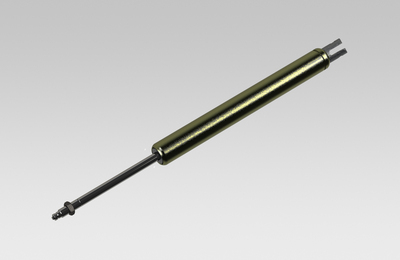
What is a Locking Gas Spring?
There are three types of Locking Gas Springs flexible, rigid in extension, and rigid in compression. All types of Adjustable Locking Gas Springs incorporate a mechanism enabling the user to “lock” the rod at any point in its travel through a plunger that protrudes from the rod. When this plunger is depressed the rod is free to operate as normal. When the plunger is released, which may be at any point in the stroke, the rod is locked in that position.
- FLEXIBLE: the rod may slightly “flex” under heavy compression or tension loading. These springs must be used in a rod-down orientation unless an “oil chamber” system is fitted.
- RIGID IN EXTENSION: no flex when rod is being pulled, slight flex when rod being pushed. These springs RIE springs can be used in any orientation.
- RIGID IN COMPRESSION: slight flex when rod being pulled, no flex when rod is being pushed. These springs must be used in a rod-down orientation unless an “oil chamber” system is fitted.
The amount of flexibility depends on the load applied when the spring is locked. Please contact our Technical Sales team for assistance in specifying the correct product for your application.
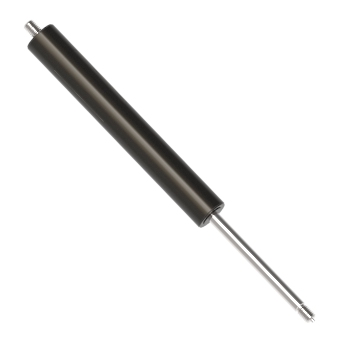
Motion control characteristics
Our locking springs can be supplied with motion control features at two (low-high) damping settings or tailored to your specific needs. While Flexible springs are partially damped products, the other two types are fully damped.
Overload Function
A compressive or tensile overload function can be added to our locking springs for manual override of the locking mechanism. This feature allows for fast or emergency override of the spring’s locking feature and prevents damage to the application or spring. For example, locking springs fitted on airline seats are fitted with tensile overload valves, allowing quick seat retraction by the crew.
Aluminum Locking Gas Springs
Industrial Gas Springs also offers gas springs with an aluminium body. Aluminum locking springs are mainly used by the Aerospace industry for weight and fuel efficiency considerations.
Release Valve
All locking gas springs can be supplied with a release valve, which allows the installer to reduce the force. This release valve also allows IGS to easily and economically recharge the gas spring should too much gas be released.
Locking Gas Spring Comparison Chart
| FLEXIBLE | RIGID IN TENSION | RIGID IN COMPRESSION | |
|---|---|---|---|
| Rigidity in Tension | Good | Fully Rigid | High |
| Rigidity in Compression | Good | High | Fully Rigid |
| Release Valve Option | Yes | Yes | No |
| Typical Applications | Chair backs, seat height adjusters and equipment for the physically disabled where the flexing gives a comfortable "bouncy" feel. Further applications are those where no or little extra force is applied once the gas spring has been locked such as VDU height adjustment. | Applications for rigid in tension gas springs include hospital beds, aircraft, coach and rail seat back recline control and wheel chair recline and support systems. | Applications include operating, massage and veterinary tables and wheel chair recline and support systems. This type of locking gas spring is always used where no movement can be tolerated when the apparatus is in its locked position. |